
Stories the Ganga Still Tells
Mythology, ecology, pilgrimage accounts, and cultural commentary — grounded in place, published regularly. The river's story is not finished.


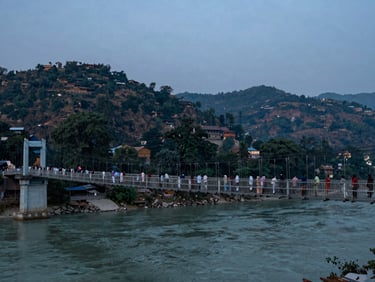
Aarti at the Edge of Holy Ganga near Bhagirath tapa sthali
Gartang Gali: The Legendary Crossroads of Indo-Tibetan Trade
Gaumukh: The Majestic Origin of the Ganges River
As the sun begins to set and grace the sacred ghats, the holy Ganga aarti unfolds at Bhagirath Tapa Sthali, where the river embraces the sky with flames of devotion. This liturgy, a heartfelt communion with the divine, is not merely a spectacle, but a profound ode to the transformative power of faith through the chanting of ancient mantras. Each flicker of the diyas illuminates the hearts of devotees, awakening a deep sense of spirituality and reverence. The symphony of bell chimes, the rhythmic chants, and the fragrant offerings create an atmosphere thick with devotion, inviting all to experience the sacredness of this moment.
The Gartang Gali, an ancient Indo-Tibetan trade route, captivates tourists with its breathtaking views and historical significance. Nestled high in the mountains, this scenic pathway not only offers a glimpse into the rich cultural exchanges between India and Tibet but also showcases stunning landscapes that attract adventure seekers and nature lovers alike. Visitors can explore the remnants of trade history, enjoy thrilling treks, and immerse themselves in the tranquil beauty of the region, making it a must-visit destination in recent times.
Gaumukh, known as the source of the Ganges River, is a significant glacier located in the Indian Himalayas. It is a sacred site for Hindus and is characterized by its stunning natural beauty, drawing trekkers and pilgrims alike. The retreat of glaciers like Gaumukh highlights the effects of climate change on water sources crucial to millions of people.
— Mukhwa
Bhagirath Tapa Sthali: The Sacred Spot of Tapa
Mukhwa Village: The Maika of Maa Ganga
Bhagiratha's Penance and the River's Descent
Bhagirath Tapa Sthali, located in the serene region of Gangotri, is a significant spiritual site where it is believed that the sage Bhagirath performed deep penance to bring the river Ganga to Earth. This holy place offers breathtaking views of the surrounding mountains and serves as a tranquil spot for meditation and reflection, attracting pilgrims and tourists alike who seek to experience its spiritual ambiance.
Mukhwa is considered to be the maika of the Ganga, where the Ganga Bhog Murti resides and is worshipped for six months after Gangotri closes during the period known as the Sheet Prawas.
The story of how the Ganga came to earth is not metaphor alone — it encodes a geography. Reading the Puranic account against the terrain it describes.
When the Writing Calls You to Go
Every sacred site on these pages has a road to it. When you are ready to make the journey, the Pilgrimage Guide holds the route, the context, and the practical ground.